—Children’s book ghostwriting services
Children’s book ghostwriting services for every age category
AuthorWings ghostwrites children’s books from board books through middle grade, with manuscript and full-color illustrations included in every tier from $2,999. Read-aloud rhythm, age-calibrated vocabulary, page-turn pacing, and illustration-text choreography are calibrated to the locked age band. 100% rights transfer on manuscript and illustrations. No AI drafting, in writing.
—WHY IT MATTERS
Why children’s book ghostwriting fails without read-aloud rhythm
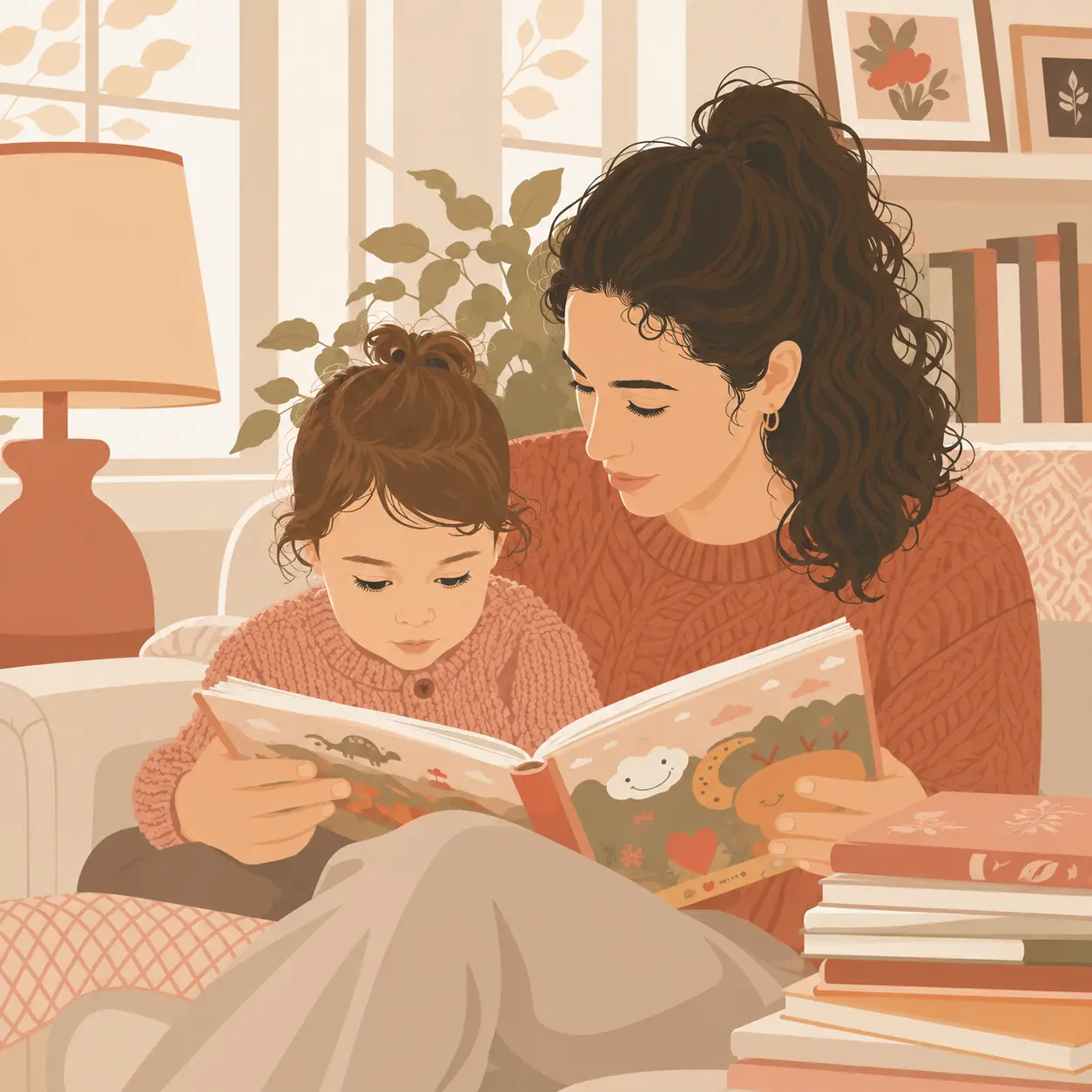
Children’s books are the only commercial book category in publishing where the buyer is not the reader. A parent buys it. A grandparent gifts it. A teacher selects it. The four-year-old who actually decides whether the book gets a second night does not browse Amazon and does not write reviews. The book has to win two completely different audiences in the same 600 words. That is a craft problem, and it is the one most first-time children’s authors underestimate.
Four crafts separate a children’s book that earns the second night from one that quietly retires after the first. The signs differ by author. For a launched self-publisher the signal is polite reviews and a quiet launch. For a pre-launch author it is a manuscript that reads fine on the desk and stumbles on a parent’s lips at bedtime. For a brand, faith-based, or educator author it is a book that does its commercial or pedagogical job but the children themselves do not ask for it twice.
The first is read-aloud rhythm. A picture book is a performance script for a tired adult voice at the end of a long day. Lines that look fine on the page can collapse in the mouth. Sentences that flow when read silently can stumble when read aloud at 8:47pm to a child who is fighting sleep. Working children’s writers draft every line out loud, multiple times, before the manuscript leaves their desk. That sounds obvious. It is also the single most skipped step in self-published children’s books.
The second is page-turn pacing. A picture book is not a short story. It is roughly 14 to 16 spreads, and each spread has to do a specific job. A page turn is a small reveal, not a transition. Putting the punchline of a scene on the same spread as its setup kills the joke. Putting a quiet emotional beat on a busy double-page spread buries it. Working children’s writers think in spreads from the first draft, not in paragraphs.
The third is age-calibrated vocabulary. A board book reader at 18 months, a picture book reader at four, an early reader at six, and a chapter book reader at eight have completely different vocabularies, attention spans, and reading capacities. According to Circana BookScan (Q3 2025), the kids’ market was the top growth segment in the US book market that quarter, with juvenile non-fiction up 6% and infant books up 13% — and inside that resilient category the quality bar is exact. Pitch a manuscript one age level too high and the child loses interest by spread six; one level too low and the parent shelves it as condescending.
The fourth is illustration-text choreography. The text and the image have to do different jobs on the same spread. If the text describes what the picture already shows, the spread feels redundant. If the text contradicts the picture without doing it on purpose, the child gets confused. The strongest children’s books use the text to say what the picture cannot, and the picture to say what the text refuses to. Coordinating that choreography requires a writer who thinks in pictures and an illustrator who thinks in language. Most self-published children’s projects have neither, and the manuscript suffers for it.
Children’s book ghostwriting services that work pair the author’s story, message, and characters with a writer who has shipped books inside the right age category and treats all four crafts as non-negotiable. The world, the heart, and the message come from the author. The performance script comes from a working children’s writer.
—AGE CATEGORIES
Children’s book ghostwriting calibrated to every age category
Children’s books are not a single category. They are six categories, each with its own word count, vocabulary band, attention span, and shelf logic. A manuscript pitched at the wrong age is the most common reason a self-published children’s book lands with polite reviews. The cards below cover the six categories AuthorWings ghostwrites for, with the conventions of each.
Board Books
Ages 0 to 3. Roughly 100 to 200 words across 12 to 14 thick pages. The audience is pre-verbal or barely verbal, and the buyer is almost always a new parent or gift-giver. Rhythm is everything. Repetition is engineered. The text is performance language for an adult holding a wriggling toddler. Concept books, first words, animal sounds, bedtime patterns, and emotional vocabulary are the dominant subjects. Illustrations carry as much narrative weight as the text.
Picture Books
Ages 3 to 7. Roughly 400 to 800 words across 32 pages, almost always 14 to 16 illustrated spreads. The dominant children’s category by sales volume and the one most aspiring children’s authors think of first. Read-aloud rhythm, page-turn pacing, and illustration-text choreography are non-negotiable here. Subjects range from bedtime stories to social-emotional learning, from humor to grief, from family to identity. The category rewards specificity and punishes generality.
Early Readers
Ages 5 to 8. Roughly 1,000 to 2,500 words across short, controlled chapters with high illustration support. The reader is doing the reading, not the parent, which changes the writing job entirely. Vocabulary is calibrated to a Lexile or guided-reading level. Sentence structure is short. Repetition reinforces sight words. Authors who underestimate this category produce manuscripts a beginning reader cannot actually read alone.
Chapter Books
Ages 7 to 10. Roughly 5,000 to 12,000 words across 6 to 12 chapters, with spot illustrations supporting rather than carrying the story. The reader is now reading independently and looking for series. This is where the genre conventions of mystery, adventure, friendship, school, and humor establish themselves in a child’s reading life. Series potential is a major buyer signal in this band. Authors planning more than one book benefit from scoping the series at the contract stage.
Middle Grade
Ages 8 to 12. Roughly 25,000 to 50,000 words across full novel-length chapters with limited or no illustrations. The reader is fully literate, often reading above grade level, and is choosing books based on covers, peer recommendations, teachers, and school book fairs. Themes can include mortality, identity, family conflict, and complex moral questions, rendered with age-appropriate emotional honesty. This category produces the longest commercial runways: middle-grade series can sustain a child reader for two or three years.
Concept and Activity Books
Ages vary by format. Alphabet books, counting books, color and shape books, lift-the-flap and seek-and-find titles, sticker and activity workbooks, devotional and values books for faith-based audiences, and educational tie-ins for classroom and homeschool use. Buyers are heavily weighted toward educators, gift-givers, and licensing-track authors. Word count and structure are entirely format-driven. The craft challenge is making a teaching book feel like a play book.
—OUR CRAFT
The three crafts that make children’s books worth re-reading
Section 2 named four crafts. Three of them are led by the writer and decide whether the manuscript earns the second night, including the art direction the writer briefs before illustration begins. These are the three crafts AuthorWings ghostwriters work on at the sentence level, with the bar set by the read-aloud test rather than by the page.
Read-Aloud Rhythm
Every line is drafted out loud, multiple times, before it reaches the manuscript. Sentences are paced for breath, repeated phrases land on a beat a child can predict, and rhyme, when used, is precise and never forced. The result is a manuscript that performs in a parent’s mouth instead of just reading on a page.
Age-Calibrated Vocabulary
Every age category has its own vocabulary band, sentence-length expectation, and conceptual ceiling. Working children’s writers calibrate at the word level, not just the sentence level. A single age-inappropriate verb in spread three is enough to lose the four-year-old.
Illustration-Text Choreography
AuthorWings manuscripts are drafted with spread-by-spread art notes that brief the illustrator on what each page should reveal, what should be held back, and what tension the page turn earns. The author reviews and approves the choreography before any illustration begins. Coordination is the writer’s job, not the illustrator’s.
—INVESTMENT
Children’s book ghostwriting pricing across age categories
Pricing on this page is structured around three scopes that map to the six age categories from Section 3. Every tier includes the manuscript, the illustrations, the rounds of revision, the rights transfer, and the editing built into the manuscript phase. Nothing on this list is sold separately later. The only services that live outside these tiers are publishing, distribution, and marketing.
| Feature |
Starter $2,999 Choose Starter |
Most Popular
Growth $4,999 Choose Growth |
Authority $9,999 Choose Authority |
|---|---|---|---|
| Scope and timeline | |||
| Word count limit | Up to 800 | Up to 2,500 | Up to 15,000 |
| Best for | Picture books, board books, simple early readers | Extended picture books, early chapter books | Chapter books, illustrated middle grade, picture book series |
| Age range | Ages 3 to 7 | Ages 5 to 9 | Ages 8 to 12 |
| Timeline | 10 to 14 weeks | 14 to 20 weeks | 20 to 28 weeks |
| Payment options | Single / 50-50 | Single / 50-50 | Single / 50-50 / Milestone / 3 mo |
| Illustration and visual design | |||
| Custom full-color illustrations | Up to 10 | Up to 20 | Up to 30 + chapter heading spots |
| Character design | Consistent style | Consistent style + setting and environment | Character design library + setting and environment |
| Illustration revision rounds | 2 rounds (sketch stage) | 3 rounds (sketch + color) | Unlimited within scope |
| Final illustration formats | Print-ready + ebook-optimized | Print-ready + ebook-optimized | Print-ready + ebook + fixed-layout |
| Manuscript and delivery | |||
| Story concept development | Standard | Standard | Series-arc development |
| Manuscript revision rounds | 2 rounds | 2 rounds | 3 rounds |
| Dedicated project manager | ✗ | ✓ | ✓ |
| Source files on delivery | PSD or layered PNG + Word | PSD or layered PNG + Word | All source files + character bibles |
In every tier
- Discovery consultation and creative brief
- Read-aloud rhythm calibration
- Age-calibrated vocabulary
- Spread map or chapter beat sheet
- Read-aloud pass before author handoff
- Editing built into the manuscript phase
- Mutual NDA before any specifics shared
- 100% rights transfer, manuscript and illustrations
—HOW IT WORKS
How children's book ghostwriting builds books kids re-read
A children's book project runs on a fixed spread count, a small word budget, and an illustration phase that has to brace the writing rather than catch up to it. The seven-step process below runs each phase in sequence, with author review built into every handoff and illustration paced against the manuscript.
I
Week 1
Discovery and Age Lock
The opening conversation locks the age category, the format, the target word count, and the core idea. Picture book or chapter book. Concept book or narrative. Series potential or standalone. The author shares any drafts, sketches, character names, or message goals already developed. For authors returning with a previously self-published children's book, the discovery also walks the existing manuscript against the four crafts at the locked age band to identify which crafts the launch revealed were off, before any rebuild scope is quoted. This phase ends with a one-page creative brief that names the audience, the spread count, and the manuscript scope. Most stalled children's projects fail here by trying to be three age categories at once.
II
Weeks 1-2
Story Concept and Spread Map
The story is shaped into a spread-by-spread map before any draft is written. For picture books, that means 14 to 16 spreads with each one assigned a specific narrative job. For chapter books, that means 6 to 12 chapter beats. The map names the page turns, the emotional peaks, and the chant-along moments. Page-turn pacing is locked at this stage, before a single sentence of prose is drafted. The author reviews and approves the map. No drafting starts until the map is locked. This is the phase that prevents pacing problems before they get written.
III
Weeks 2-5
Manuscript Drafting and Read-Aloud Pass
The full manuscript is drafted to the locked spread map, then read aloud in full multiple times against the read-aloud test. Lines that stumble in the mouth get reworked. Repeated phrases get tuned for chant-along rhythm. Vocabulary is checked against the age band. Sentence rhythm is paced for the page turn. The draft that goes to the author for first review has already been performance-tested, not just edited.
IV
Weeks 5-7
Author Review and Manuscript Lock
The author reads the manuscript, gives notes, and either approves the direction or requests revisions. The Starter and Growth tiers include two manuscript revision rounds. Authority includes three. No illustration work begins until the manuscript is locked, because illustration revisions cost ten times more than manuscript revisions. The lock happens in writing. Anything the author wants to change after this point gets scoped honestly before art continues.
V
Weeks 7-10
Character and Style Design
With the manuscript locked, character design begins. The illustrator drafts a style sheet for each named character: turnaround views, expression range, wardrobe consistency, and proportion rules. The author reviews each character at the sketch stage before any final color work. Setting and environment design follows the same pattern. Style consistency across every spread is owned at this phase. Style drift inside a children's book is one of the fastest ways for a manuscript to lose its reader.
VI
Weeks 10-22
Spread Illustration and Choreography Review
Spreads are illustrated in batches. The author reviews sketches before color, and color before final. Spread-by-spread choreography (what the text says versus what the picture says) is checked at sketch stage. Page-turn pacing is checked at color stage. Revisions vary by tier: Starter includes two illustration rounds, Growth three, Authority unlimited within scope. The illustration phase is the longest single block of the project. It is also the one most self-published authors underestimate.
VI
Final Polish and Print-Ready Handoff
Final pass on manuscript and illustrations together. Layout for the chosen format is set. Print-ready files (PDF/X-1a for print, optimized PNG for ebook, fixed-layout EPUB where the format calls for it) are delivered alongside the editable source files. Full rights transfer to the author at handoff. From here the manuscript is ready for children's book publishing and distribution. The author's name is the only name on the cover.
—WHO WE SERVE
Six children's book authors we ghostwrite for most often
Children's book buyers do not arrive at AuthorWings from one direction. Parents, professionals, faith leaders, educators, and returning self-publishers all sit on the same calendar. The six personas below describe who we ghostwrite for most often, and the specific concern each one walks in carrying.
The Parent Author
Often the first-time writer. The story has been a bedtime ritual for years, and the author wants it to outlive the season the kids age out of. The concern is voice fidelity: that the page will sound like a stranger, not the parent at bedtime. The work protects the original telling while adding the read-aloud craft a printed book demands.
The Educator Author
Teachers, librarians, reading specialists, and homeschool parents writing with classroom use in mind. The audience is specific, a grade band or reading level, and the manuscript has to work as both story and teaching tool. The concern is that ghostwriting will feel generic. The work matches a writer who has shipped inside the same Lexile and pedagogical band.
The Therapist or Counselor Author
Child therapists, school counselors, and clinical psychologists writing about anxiety, grief, divorce, neurodiversity, or trauma. The expertise is real and so is the audience. The concern is that a book on a hard topic will read as a lecture in picture-book clothing. The work renders the clinical message with read-aloud rhythm and age-calibrated honesty so the book actually gets used.
The Faith-Based Author
Pastors, imams, rabbis, and religious educators writing devotional books, values stories, and tradition-grounded narratives. The manuscript has to honor doctrine, language, and visual sensitivities specific to the faith. The concern is finding a writer who treats the tradition with care rather than approximating it. The work matches a writer who has shipped inside the same framework.
The Legacy Author
Grandparents, family historians, and elders writing books that carry a family story or generational lesson forward. The audience is often one specific child or lineage. The concern is that the book has to live in a family for thirty years and still hold up at bedtime. The work treats the manuscript as a permanent record built to be read aloud across generations.
The Returning Self-Publisher
Authors who shipped a children’s book on their own, watched re-read traction stall, and could not separate cover, title, or marketing from the writing. The concern is diagnostic: figuring out which craft the manuscript missed before committing to a sequel. Story, world, characters, and series rights stay with the author throughout the rebuild.
—Frequently Asked Questions
Children's book ghostwriting questions parents and authors ask
Cost and timeline. Rhyme. Illustrator handoff. Age-appropriateness. School and library suitability. Sensitive topics handled in front of a four-year-old. Rights when a real child appears in the dedication. The questions below are the ones parents, educators, therapists, and faith leaders walk into the discovery call already carrying.
How much does it cost to hire a children's book ghostwriter?
Children's book ghostwriting at AuthorWings starts at $2,999 and runs in three tiers: Starter at $2,999, Growth at $4,999, and Authority at $9,999. Every tier includes the manuscript, full-color illustrations, revision rounds, editing built into the manuscript phase, and 100% rights transfer on both text and art. The tiers differ by scope, word count, illustration count, and revision rounds, not by the skill of the writer or illustrator. Publishing setup, ISBN registration, distribution, marketing, and audiobook production are priced separately. The cost calculator builds an exact quote in about 60 seconds.
How long does it take to write and illustrate a children's book?
Between 10 and 28 weeks, depending on the tier and age category. Starter picture books run about 10 to 14 weeks. Growth extended picture and early chapter books run about 14 to 20 weeks. Authority chapter books and illustrated middle grade run about 20 to 28 weeks. The illustration phase is the longest single block, because sketches, color, and revisions are paced against author review at each stage. The manuscript is locked before any illustration begins, which protects the timeline from expensive late changes.
Does the illustrator the writer is paired with know the right age category?
Illustrator matching happens at the same scoping stage as writer matching, and both decisions are made against the locked age category from Step 1. A picture book illustrator who has shipped board books and picture books works on board and picture book projects. A chapter book illustrator with shipped middle-grade work handles chapter and illustrated middle-grade titles. Sample work from prior children's projects in the same age band is shared with the author before the project starts. Generalist illustrators are not assigned to age-specific projects.
What happens if the illustrations and the manuscript do not feel like the same book at the end?
It gets caught and corrected at the sketch stage, before it can reach the final art. That mismatch is the single most common failure mode in self-published children's books, which is why the workflow runs manuscript-first with author lock before any final illustration begins. Spread-by-spread art notes accompany the manuscript handoff to the illustrator. The author reviews character design at sketch stage before any color work, and reviews each spread at sketch stage before color is applied. Misalignment caught at sketch stage costs nothing to fix. Misalignment caught at final color costs the project significantly more.
How is age-appropriateness actually checked, beyond the writer's judgment?
Manuscripts are checked against published guided-reading and Lexile level frameworks for the locked age band. Vocabulary is screened for age-appropriate word choice. Sentence length is screened for the cognitive band. Theme handling is checked against publisher-side conventions for the category, particularly on harder topics such as loss, divorce, illness, identity, or family conflict. Authors writing for school or library suitability can request additional screening against state-level reading list conventions at scoping.
Can you write a rhyming children's book, or is rhyme a bad idea for self-publishing?
Yes, and the choice is made deliberately at the brief stage rather than by default. Rhyme done well is a strong asset in board and picture books, because it drives the read-aloud rhythm children predict and chant along to. Rhyme done poorly is one of the fastest ways to lose both the parent and the child, because forced meter and near-rhymes stumble the moment the book is read aloud. When a project calls for rhyme, every line is metered and drafted out loud so the stress pattern holds on a tired adult voice at bedtime. When a story does not need rhyme, prose with strong internal rhythm often serves it better. The writer matched to the project has shipped in whichever mode the book needs.
Will the book work in a classroom or library, or is it only for home reading?
That depends on the project brief. Books written with classroom or library suitability as a stated goal are scoped to those conventions: age band aligned to a specific grade, themes handled within school-appropriate boundaries, illustration content suitable for institutional shelves. Books written for home reading or specialized audiences (faith-based, family-legacy, brand-tied) follow their own conventions instead. The author chooses at brief stage. Trying to win both audiences with one manuscript usually wins neither.
How are sensitive topics like grief, divorce, illness, or trauma handled in children's books?
Genre and age band govern treatment, and the author's stated boundaries govern the rest. Picture books rendering grief, divorce, anxiety, illness, or family change use age-appropriate language, pacing, and resolution patterns drawn from established titles in the same category. Trauma is rendered with research and care, never with detail beyond the age band. Therapist-author and counselor-author projects often involve a clinical review of the manuscript before lock. The boundaries are set in writing at the brief stage and the manuscript stays within them.
Who owns the characters, the illustrations, and any future series rights?
The author owns 100% of the manuscript, every named character, every illustration delivered, the world, and any series, sequel, or spin-off rights derived from them. Source files (PSD or layered PNG for illustrations, Word for manuscript) are delivered alongside the print-ready files. If the author writes a sequel without AuthorWings, every character and visual element from book one travels with them. The ghostwriter and illustrator have no claim on any character, no royalty share, and no derivative right.
Can my child's name, likeness, or real-life detail be used in the children's book?
Yes, with consent in writing. Books written for or about a specific child (legacy projects, family-tradition books, named-character bedtime stories) commonly use the child's name, dedication, or likeness in illustration. The author provides the consent paperwork for the child or, if the child is a minor, the parents and legal guardians do. Books intended for commercial release with a real child as a named character require additional consent and rights documentation that gets scoped at the discovery call before any contract is signed.
What if the author has finished illustrations already commissioned from another illustrator?
This is the illustration-first workflow described in Section 7. Existing illustrations go into the project inventory at the brief stage. The manuscript is then built or rewritten to fit the spreads, panels, or character poses already drawn. Pricing reflects that the illustration work has already been paid for elsewhere; the calculator scopes the project as a manuscript-only or manuscript-plus-additional-illustrations engagement. Authors who arrived this way commonly stalled because the writing did not match the art. The ghostwriting fixes that.
Is the book confidential, and is AI used in any part of the project?
Mutual non-disclosure agreements are signed before any specifics are shared. The contract carries an ongoing confidentiality clause that survives project completion. The ghostwriter, illustrator, and project manager are bound by the same NDA. AuthorWings does not name children's book clients in marketing material without explicit written permission. The manuscript is written by a working human writer and the illustrations are drawn by a working human illustrator. AI is not used to generate manuscript prose or illustration content. Authors who require an explicit no-AI clause can have it added to the agreement before signing.
Is hiring a children's book ghostwriter cheating?
Children's publishing has used collaborative writing for decades, including in some of the most loved series on the shelf. Many beloved board, picture, and chapter book authors have worked with co-writers, ghostwriters, and editorial collaborators to produce books on commercial schedules. The author who hires a children's book ghostwriter is buying read-aloud craft the way a professional buys legal counsel. The story, message, characters, dedication, and creative ownership remain with the author. The cover credit is theirs alone.
I already self-published a children's book and the launch landed quietly. Can AuthorWings rebuild the manuscript for a second edition, a sequel, or a series relaunch?
Yes. A common pattern at scoping is a first-time children's author who shipped a book, got polite reviews, watched re-read traction stall, and could not identify whether the issue was cover, marketing, or the writing itself. The diagnostic AuthorWings runs at the discovery call walks the existing manuscript against the four crafts (read-aloud rhythm, page-turn pacing, age-calibrated vocabulary, illustration-text choreography) at the locked age band. The rebuild keeps the author's story, world, characters, and all series rights, and produces a manuscript engineered for the second-night re-read. Existing illustrations either travel forward (illustration-first workflow, Section 7) or get redrawn against the new spread map.
Next Steps
❦Build the book a child will ask for tomorrow night
The story has been a bedtime ritual for years, or a folder of finished art waiting for the right words, or a clinical message looking for a four-year-old’s ear. The book that earns the second night is built on read-aloud rhythm, age-calibrated vocabulary, and illustration-text choreography. Book a call with a children’s ghostwriter to talk through age category, format, and tier, or scope it yourself on the calculator in 60 seconds.
Mutual NDA available before the call on request. 100% rights retention guaranteed. No contracts until you decide.
AuthorWings· Transparent Pricing · 100% Your Rights
Last updated: July 2026