
Home › How to Write a Memoir
How to Write a Memoir, Step by Step
Deciding to write about your own life takes courage, and most people start with more memories than they know what to do with. Here is how to write a memoir: choose one true story from your life, built around a single turning point, then outline it, write it in scenes and revise it with honest feedback.
A memoir is a true, first-person book about one part of the author’s life, told for what it means. An autobiography covers a whole life, usually in order from childhood to the present. If you want your whole life on paper for your family, our guide on how to write a book about your whole life fits better. If you’d rather tell your story in interviews and have a professional writer draft it, see our memoir ghostwriting service.
The eight steps below take you from a first idea to a finished memoir book draft. Writing a different kind of book? Start with our guide on how to write a book.
Step 1: Find the one story your memoir tells
Start by naming what your memoir is about in a single sentence. That sentence is your theme, and it decides what goes in the book and what stays out.
Try this format: “This is the story of how I ___, and what it taught me about ___.”
If you can’t fill it in yet, list ten moments that changed you. Circle the ones that connect to each other. The thread that runs through them is usually your story. If you end up with three very different sentences, you may have three books. Pick one and save the others.
Step 2: Pick the time frame and the turning point
A memoir covers only the stretch of time your story needs. The turning point is the moment after which nothing was the same, and the rest of the book builds toward it or follows from it.
For example, Cheryl Strayed’s Wild (2012) centers on her solo hike on the Pacific Crest Trail in 1995, and weaves in her life before the trail only where it explains the hike.
Leave out years that don’t serve your story, even if they mattered to you. For typical lengths by type of book, see our guide to writing a book about your life.
Step 3: How to write a memoir outline
A memoir outline is a list of the scenes you’ll show, arranged so the reader feels the change you went through. Most memoir outlines follow one arc in three parts.
- Before: who you were and what you wanted.
- Turning point: the event that forced a change.
- After: who you became, and what you understand now.
Place your key scenes along that arc. A straight timeline is the easiest structure to write. You can also braid two timelines (a present-day thread and a past thread) or group chapters by theme, once the arc is clear.
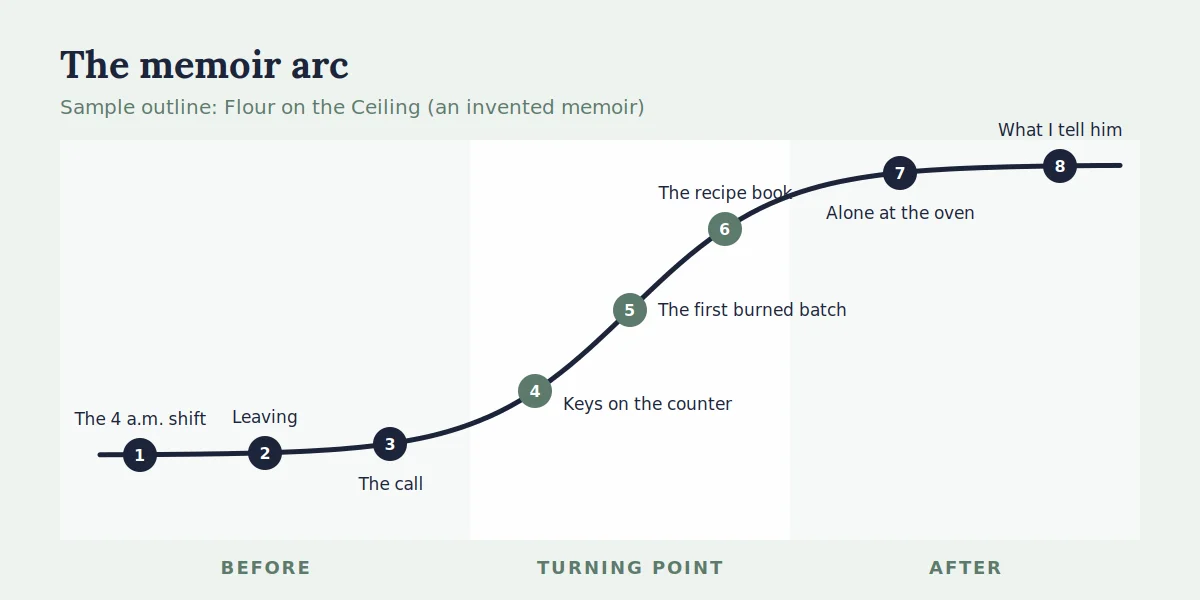
Sample outline: Flour on the Ceiling, an invented memoir
One-sentence story: This is the story of how running my father’s bakery for a year taught me who he was.
| Part | Chapter | Scene |
|---|---|---|
| Before | 1. The 4 a.m. shift | At nine, I crack eggs for my father before school |
| Before | 2. Leaving | I move to Chicago and swear I’ll never run a bakery |
| Before | 3. The call | My father has a stroke |
| Turning point | 4. Keys on the counter | I agree to run the bakery for one month |
| Turning point | 5. The first burned batch | The regulars notice |
| Turning point | 6. The recipe book | I find his notes in the margins |
| After | 7. Alone at the oven | The night I get his bread right |
| After | 8. What I tell him | I decide whether to stay |
Your outline will change as you write, and that’s normal. If you’d like to collect memories in a grid before you outline, use our free life story template.
Step 4: Gather your material and check your memories
Memory is the main source of every memoir, and it often gets details wrong, so check what you can against records. Useful sources include:
- Journals, letters, emails and old texts
- Photos and the dates on them
- Calendars, school records and medical records
- News from the time and place
- Conversations with people who were there
When two people remember an event differently, you can say so on the page. Tara Westover’s Educated (2018) is open about relying on memories and conflicting accounts, and it uses changed names for many family members.
Writing about living people also raises privacy and defamation questions. Before you publish, read our notes on writing about people who are still alive.
Step 5: Write in scenes
A scene shows one moment in real time, with a place, people, action and what was said. Summary tells the reader what happened. Strong memoirs show their key moments as scenes and use summary to move through time between them.
My father was strict about the bakery, and I resented it as a kid.
At 4 a.m. the oven door banged open. “You’re late,” my father said, without turning around. I was nine, standing in the doorway in pajamas. He handed me a bowl of eggs to crack.
To write a scene, use what you saw, heard and smelled, name specific things, and end the scene when something changes.
How to write dialogue in a memoir
Write dialogue the way you honestly remember it was said. Nobody recalls exact words from years ago, and readers accept reconstructed dialogue that stays true to what was said and how. Keep lines short, cut greetings and small talk, and use “said” for most tags. If you can’t recall a conversation well enough to quote it, summarize it instead.
Step 6: Find your voice
Voice is how you sound on the page. In a memoir it comes from two narrators: the person you were when it happened, and the person you are now, looking back.
Let your younger self live the scenes. Let your present self step in, briefly, to reflect on what those moments meant. Too little reflection reads like a diary, and too much slows the story.
Most memoirs are written in first person and past tense. Present tense can add urgency, but it’s harder to sustain across a whole book. To test your voice, read a page aloud. If it sounds like you talking to a close friend, you’re close.
Step 7: Write an opening that holds the reader
Open with a moment of tension that makes the reader ask a question. Your birth, your family tree and the weather can wait.
Jeannette Walls’s The Glass Castle (2005) opens in the present: from a taxi in New York, she sees her mother, homeless, digging through a dumpster. Then the book goes back to her childhood to explain how they got there.
Many writers draft the opening last, once they know where the book ends.
Do you need a prologue in a memoir?
You need a prologue only if it does a job your first chapter can’t, such as showing a flash-forward to the turning point. A prologue that only gives background slows the start. If yours could be cut without the reader missing anything, cut it, and fold any essential detail into chapter one.
Step 8: Revise, get feedback and edit
Let the first draft rest for a few weeks, then revise in passes: structure first, then scenes, then sentences.
- Read the whole draft in one or two sittings and note where your attention drifts.
- Check that every chapter serves your one-sentence story. Cut what doesn’t.
- Give the draft to two or three readers who read memoirs. Family members can come later, since they read for accuracy more than for story.
- Revise again, then get a professional edit.
If you want an expert view of the structure before you pay for a full edit, an Editorial Assessment gives you a written report on what’s working, what isn’t and what to fix first.
How to write a good memoir: 5 things readers notice
A good memoir tells a true story that changes the narrator, in a voice readers trust. Five things set it apart:
- One clear story. Every chapter serves the same theme.
- A narrator who changes. You end the book different from how you started.
- Scenes. Key moments play out on the page as scenes.
- Honesty about your own part. You show your own mistakes as clearly as anyone else’s.
- Meaning. Reflection tells readers why the story matters beyond you.
Four memoirs worth reading for craft:
| Memoir | Year | What to learn from it |
|---|---|---|
| The Glass Castle, Jeannette Walls | 2005 | An opening that raises a question |
| Wild, Cheryl Strayed | 2012 | One bounded story, with the past woven in |
| Educated, Tara Westover | 2018 | Honesty about memory, and changed names |
| Crying in H Mart, Michelle Zauner | 2021 | A short essay grown into a full book |
How to write a short memoir or memoir essay
A short memoir, or memoir essay, tells one moment or one short stretch of time with the same tools as a book: scene, reflection and a turning point.
- Pick one event from a short span of time.
- Open inside the moment, in scene.
- Show one clear shift in how you saw things.
- End with what you understand now that you didn’t then.
Many memoir books start this way. Michelle Zauner’s Crying in H Mart began as a 2018 essay with the same title before it became a book in 2021.
Publishing your memoir: two paths
You can query literary agents for traditional publishing, or publish the book yourself.
Traditional publishing
Agents usually expect a first-time memoirist to send a finished, revised manuscript. Most other nonfiction sells on a book proposal before it’s written, and some agents also ask memoirists for a proposal. See the full process in our guide on how to get a book published.
Self-publishing
You keep control of the book, the rights and the timeline. Our guide shows how to self-publish your book step by step.
As of October 2026, based on published guidance from literary agents and publishing experts.
Help with your memoir, at any stage
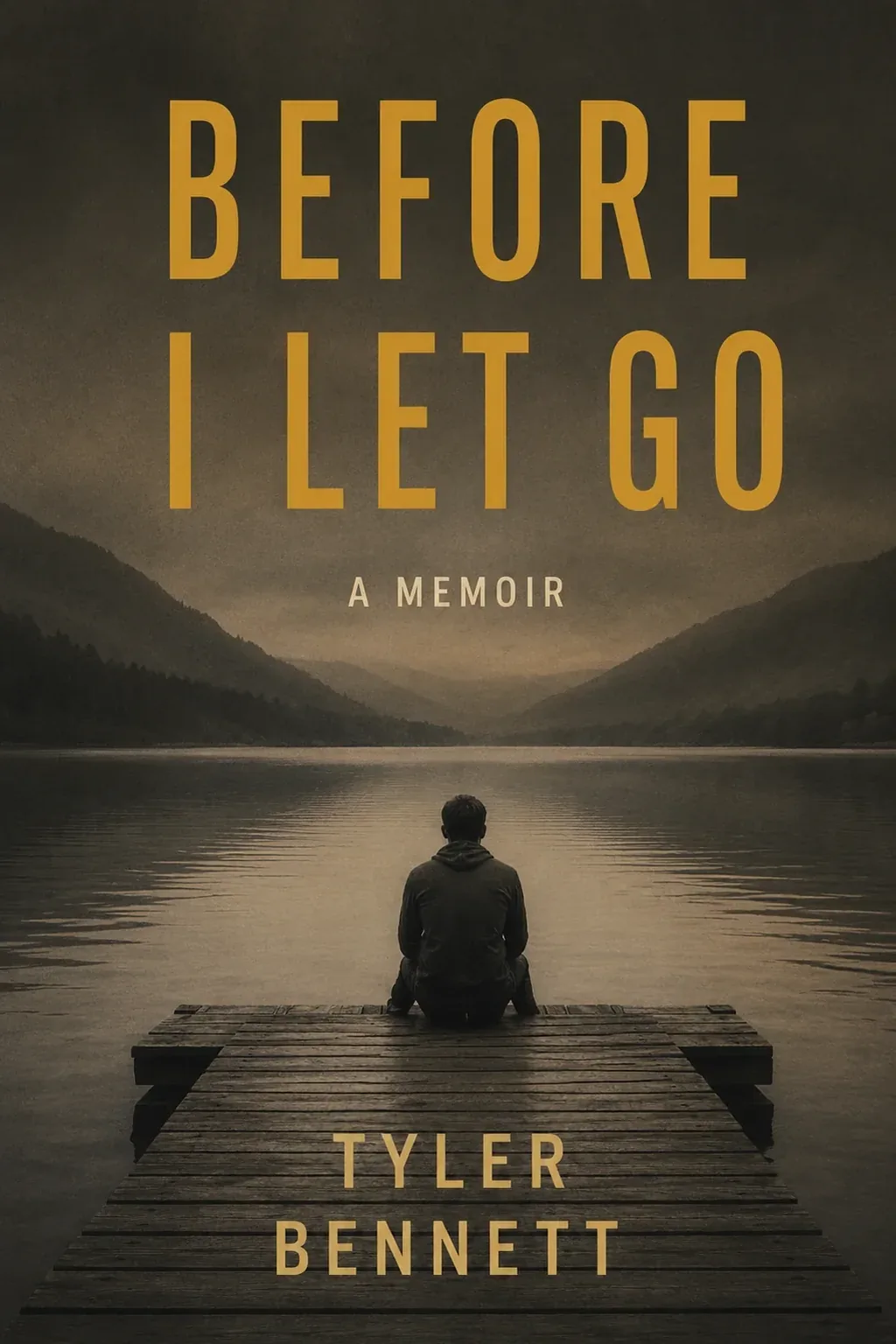
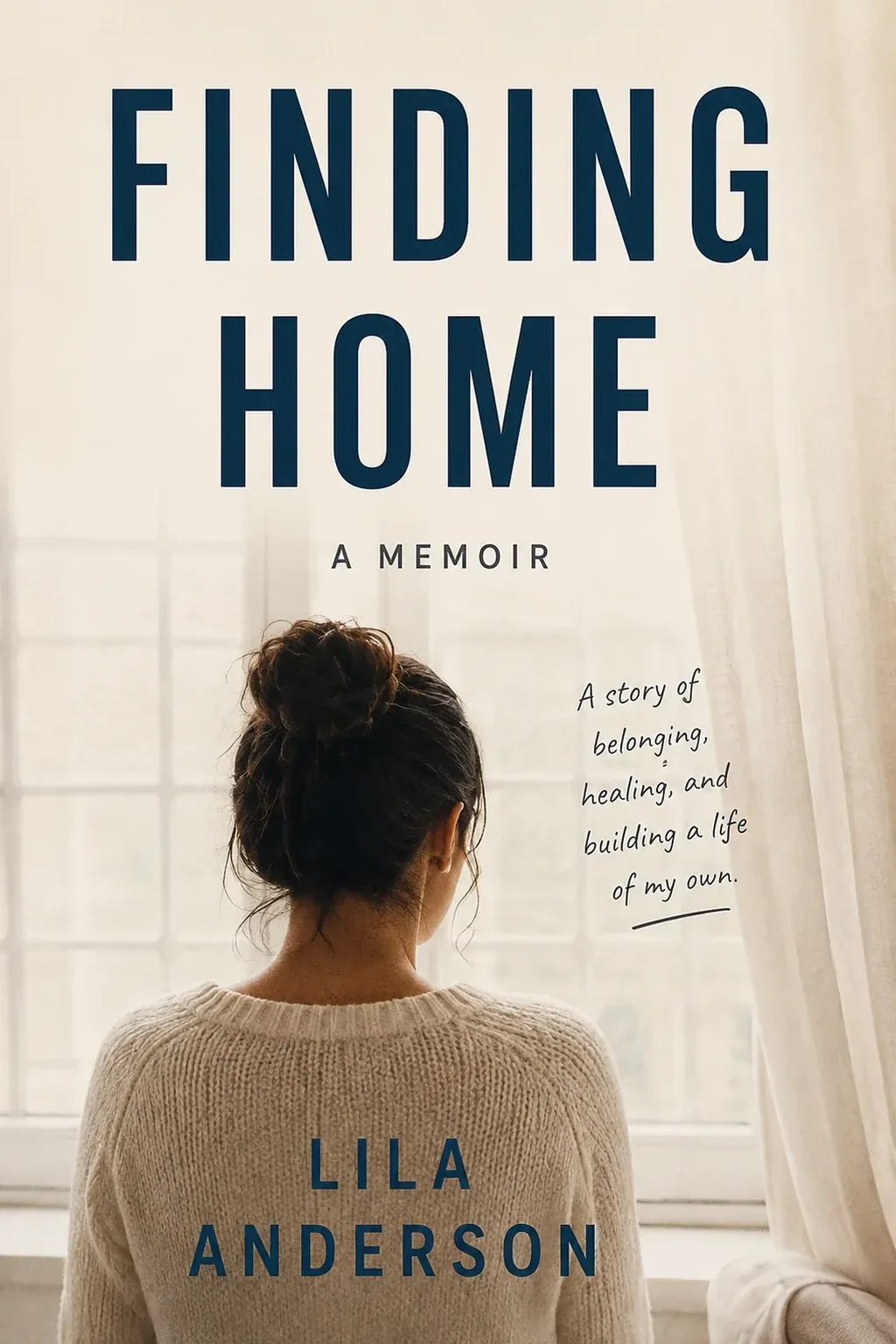
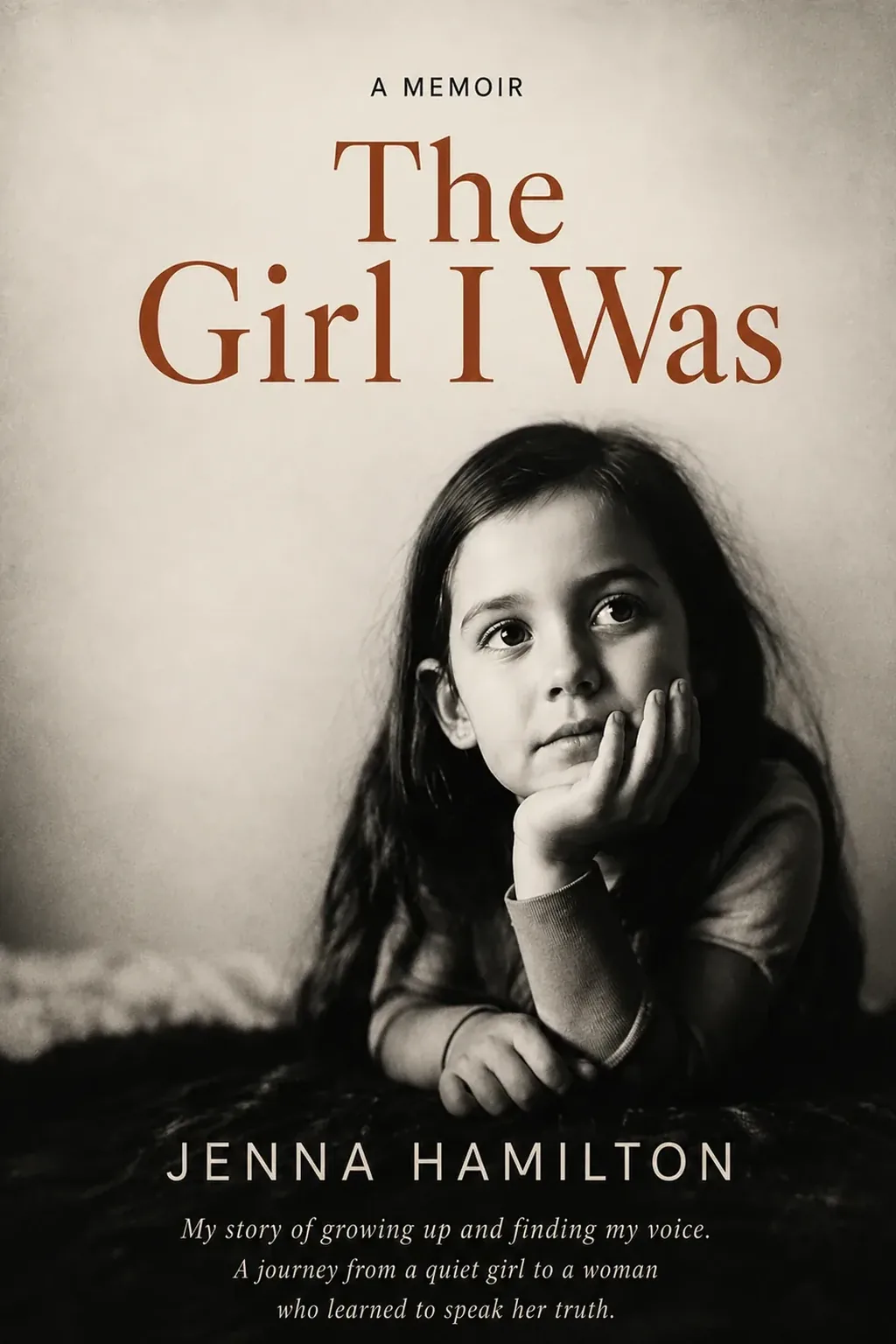
Memoir covers designed by AuthorWings
Get feedback on your draft
Editorial Assessment from $180 (up to 10,000 words). A written report on structure and chapter-level problems across your manuscript, ending with a revision plan. Credited if you book editing within 60 days. Not sure yet? Start with a $49 sample edit of up to 1,000 words, taken off your edit if you book within 60 days.
See the Editorial AssessmentHave it written for you
Memoir ghostwriting from $13,600 (68¢ a word, from 20,000 words), with all four editing levels included. You talk through your story in recorded interviews, and a professional writer drafts the book in your voice.
See memoir ghostwriting packagesPrices as of October 2026.
How to write a memoir: FAQs
Can I write a memoir about someone else?
Yes, if the book is about your relationship with that person and what it meant to you. You stay the narrator, and they appear as you knew them. A full account of another person’s life, built mainly from research, is a biography. Many books about a parent are written as memoirs for this reason: the author’s own experience is the story.
How do I write a travel memoir?
Use the trip as the frame and your inner change as the story. Let the route give the book its timeline, and choose scenes where the place pushed you to see something differently. Wild is a good model: the hike gives the book its shape, and the author’s life before the trail explains why the hike mattered.
What makes a best-selling memoir?
There’s no formula. Memoirs that sell widely often share a story many readers want, a voice they remember and an author who can reach an audience. The Glass Castle spent more than seven years on the New York Times bestseller list. Write the strongest book you can first, because marketing can’t fix a weak story.
How do I write a memoir for a school assignment?
Follow your teacher’s prompt, length and format first. Then pick one moment from a single day or week. Open in a scene, show what happened, and end with what you understand now that you didn’t then. A small moment told in detail usually works better than a big event told in summary.
Can I change names in a memoir?
Yes. Many memoirists change names and identifying details to protect people’s privacy, and Educated uses changed names for many family members. Say so in a short author’s note. A new name may not be enough if readers can still tell who the person is, so check before you publish.
How many chapters should a memoir have?
There’s no set number. Let each chapter cover one scene, or a short group of scenes, that moves the story forward, and end it when something changes. Published memoirs range from short numbered sections to long chapters. Settle the chapter breaks after your first draft, once you can see the whole book.
What should you leave out of a memoir?
Leave out anything that doesn’t serve your one-sentence story, even if it matters to you. That usually means side trips, minor relatives, long background and old scores you still want to settle. Also leave out private details about other people that the story doesn’t need.
