
Home › Children’s Book Publishing › How to publish a children’s book
How to publish a children’s book
To publish a children’s book, you either find a literary agent who sells it to a traditional publisher, or you self-publish: edit the manuscript, hire an illustrator, format the book and upload it to Amazon KDP and IngramSpark yourself. KDP is Amazon’s self-publishing platform, and IngramSpark supplies bookstores and libraries. This guide explains both paths, then walks through the eight steps of publishing a children’s book yourself, from a finished manuscript to a book in stores and libraries.
Still writing it? Start with our guide on how to write a children’s book.
Traditional publishing or self-publishing: which path fits your book?
There are two ways to get a children’s book published, and they work in opposite directions. In traditional publishing, a publisher buys the rights and pays for everything. In self-publishing, you pay for everything and keep the rights. For a deeper look, see our full comparison of self-publishing vs traditional publishing.
| Question | Traditional publishing | Self-publishing |
|---|---|---|
| How it starts | You send query letters to literary agents | You hire an editor and illustrator |
| Who pays for the illustrations | The publisher | You |
| Who chooses the illustrator | The publisher | You |
| Your upfront cost | Nothing | From a few hundred dollars to several thousand |
| What you earn | An advance up front, then royalties once it’s earned back | Every royalty, paid to your own accounts |
| Who owns the rights | The publisher, under contract | You |
| Time to a finished book | Often 18 months to two years after a publisher says yes | A few months |
| Getting into bookstores | Easier | Possible, but you do the selling |
When traditional publishing is the better fit
Choose the traditional path if you want a publisher to fund the art, you’re happy to let them choose the illustrator and cover, and you can wait. For picture books, send the text only. You don’t need illustrations to submit, and publishers usually choose the illustrator. The hard part is the first step: the largest children’s book publishers read only manuscripts sent by an agent, though many smaller houses accept them directly, and agents who represent picture books are selective. Our guide on how to get a book published covers agents, query letters and what a deal pays.
When self-publishing is the better fit
Self-publish if you want to pick your own illustrator, keep the rights to the story and the characters, publish on your own schedule, or reach a specific audience such as your school, your community or your business. The rest of this guide covers that path.
Step 1: Edit the manuscript before anything else
Edit before you pay for a single illustration. Once the art is drawn, every cut line or moved page turn means paying the illustrator again.
- Get a critique or a full edit. A critique gives you written notes on what works and what to change. A full edit makes the changes directly in your file. For a picture book, a children’s editor also checks the word count, the page turns and how the text reads aloud.
- Lock the text. Finalize every word before any artist starts. Small changes are normal later, but new scenes are not.
- Test it aloud. Read the finished text to a child who doesn’t know you, and fix the spots where they start to fidget.
Our children’s book editing team edits by book type, from a $249 critique to a $599 picture book edit.
Step 2: Illustrate your children’s book, and own the art
Illustration is the biggest cost in most children’s books, and the biggest decision. A picture book usually needs a cover and 14 to 16 illustrated spreads (a spread is two facing pages). Drawing it yourself? See our guide to illustrating a children’s book yourself. An early reader needs small spot illustrations on most pages, a chapter book needs a few black-and-white drawings, and a middle grade novel usually needs only a cover.
- Choose a style that fits the age group. Look at recent bestsellers in your category and pick an illustrator whose portfolio already looks like the book you want.
- Start with a character sheet. Before any spread is drawn, approve how the main character looks from every angle, so they look the same on every page. It’s the first step of how our illustrators work.
- Brief the illustrator spread by spread. Give them the text for each spread and a short note on what the picture should show. The illustrator brief in our free picture book planning kit covers everything they need.
- Get the rights in writing. Your contract should transfer the rights to the artwork to you, so you can print, sell and reuse it without asking again. Our illustrators transfer full rights to the artwork on every book.
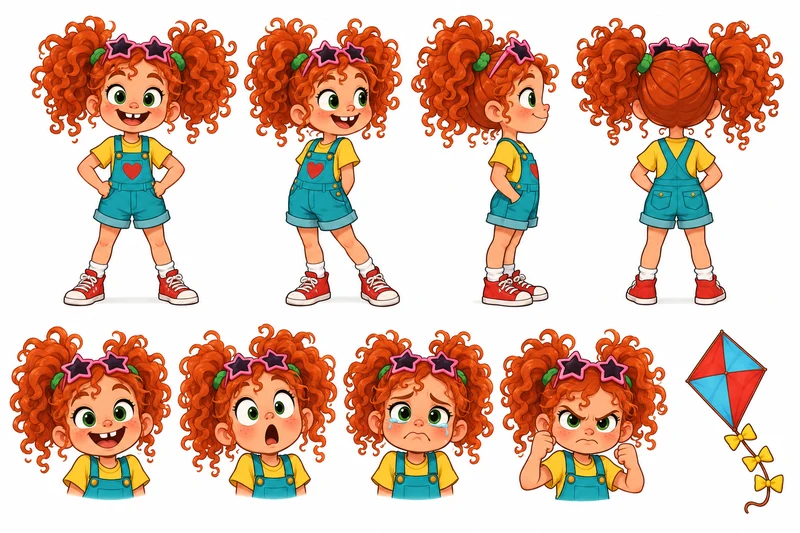
Our children’s book illustration starts at $99 for a single illustration, and a picture book package of up to 16 illustrations, with character design and formatting, is $2,595.
Step 3: Design a cover that parents trust
A child picks up a book for the character and the color. The adult buys it because the cover looks professional. Most parents first see your cover as a small thumbnail on Amazon, so it has to work at that size.
- Use one strong image. A large, clear character on a simple background reads best at thumbnail size.
- Make the title easy to read. A rounded or hand-lettered title suits picture books, and bolder type suits older readers.
- Match your category. Compare your cover with the bestsellers for the same age group, so buyers know at a glance who the book is for. See our children’s cover conventions.
- Plan the full wrap. A print cover also needs a spine and a back cover, sized to your final page count.
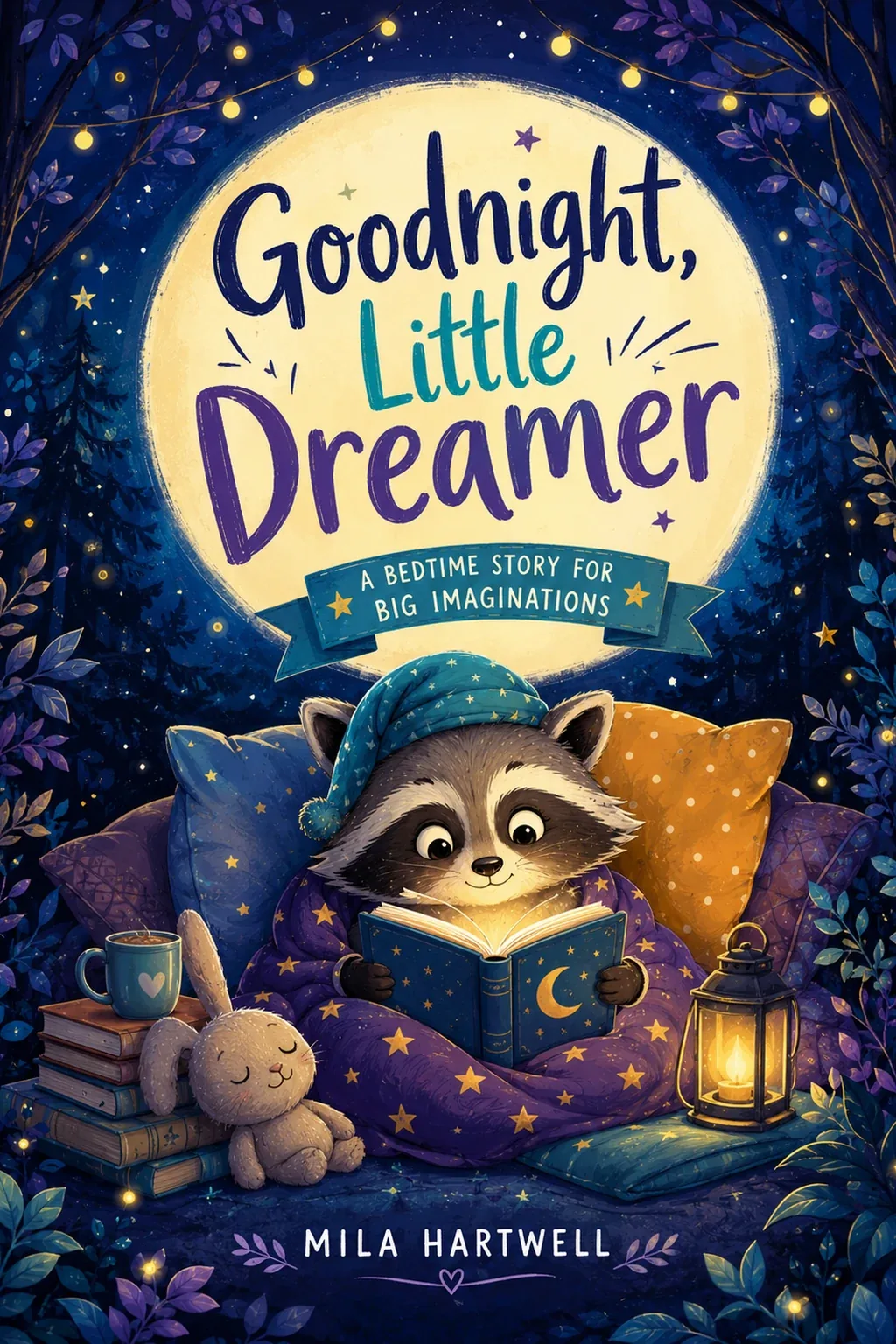
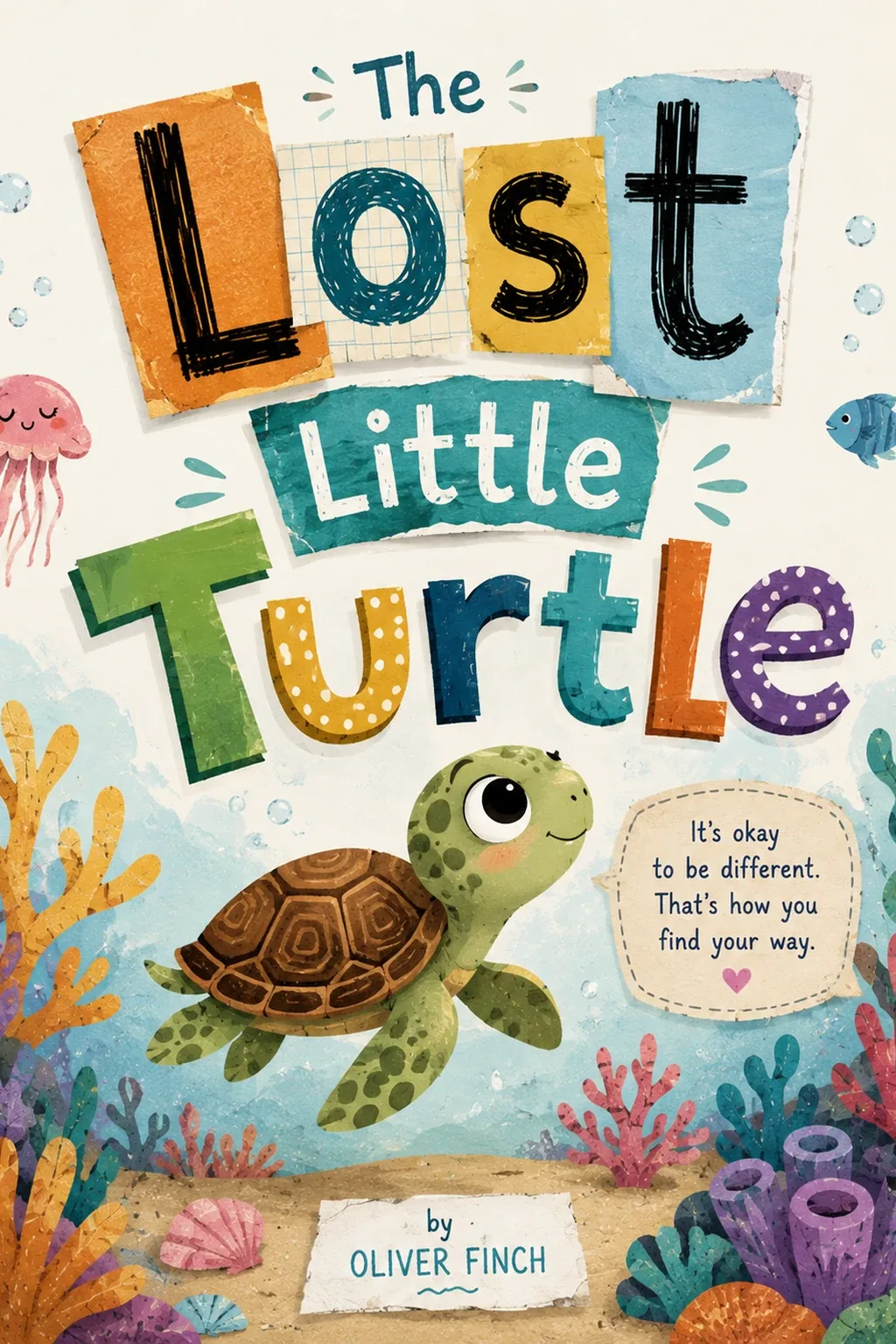
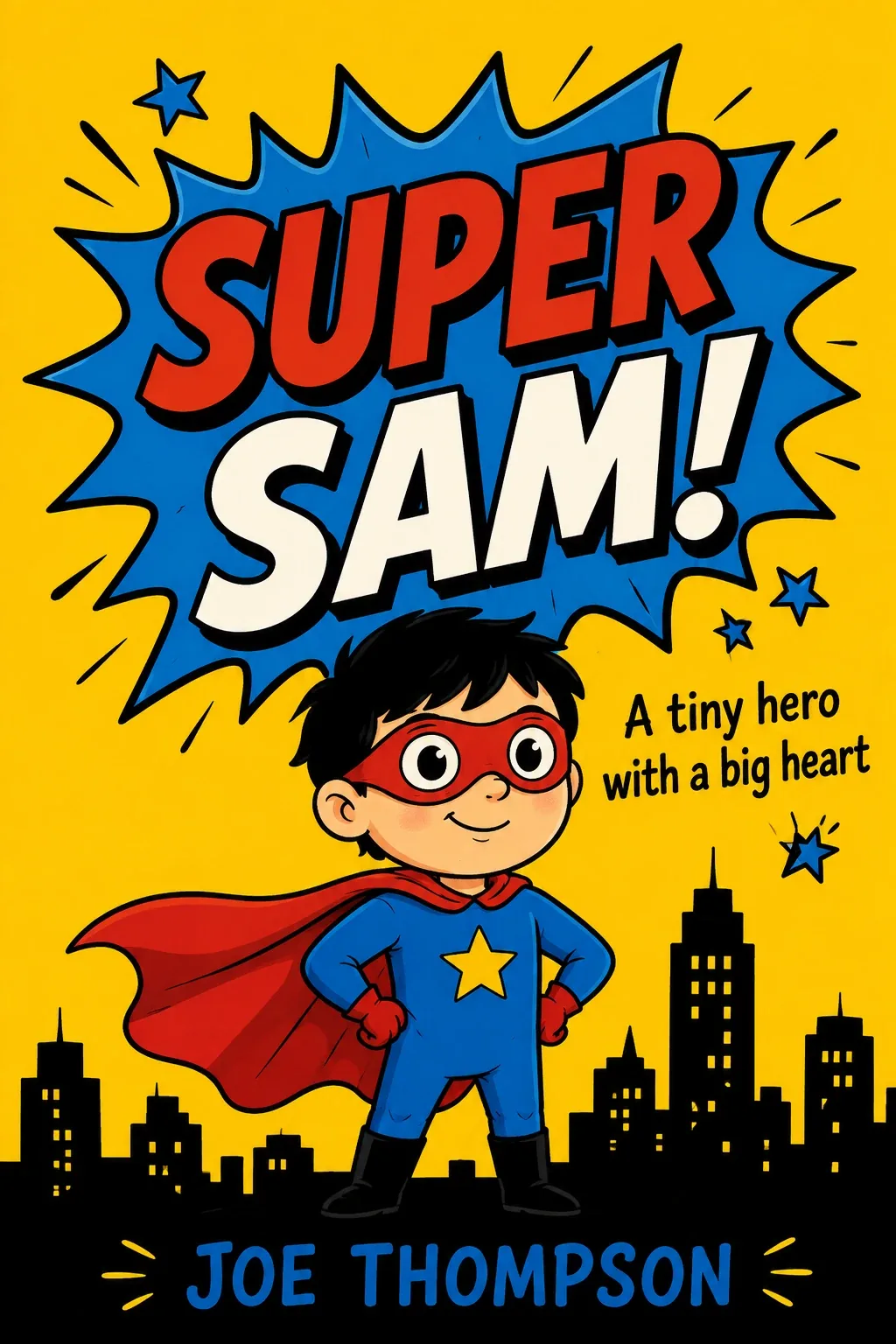
Our book cover design starts at $199 for an ebook cover and $399 for ebook, paperback and hardcover.
Step 4: Format the interior for print and ebook
Formatting turns your text and art into files the printers and stores accept. Picture books need a few things most novels don’t.
- A fixed-layout ebook for picture books. A standard ebook lets the text reflow on screen, which breaks up the spreads. A fixed-layout file keeps every page exactly as it looks in print. Amazon’s free Kindle Create tool can build one from your print PDF. See our fixed-layout picture book layouts.
- A print-ready PDF with bleed. Art that runs to the edge of the page needs extra margin, called bleed, so nothing important is cut off when the pages are trimmed.
- The right trim size. Trim size is the book’s finished page size. Picture books are often square, such as 8.5 x 8.5 inches, or 8 x 10 inches. Chapter books and middle grade use smaller novel sizes. Pick a size both KDP and IngramSpark print, so one interior file works for both. Each platform needs its own cover file, built on its own template.
- Premium color for color art. Full-color picture books need premium color printing, or the art looks dull.
Our picture book formatting covers the fixed-layout ebook and the print file for $499, and it’s free with our illustration packages.
Step 5: Get an ISBN and protect your rights
An ISBN is the number that identifies your book in stores and libraries. Get it before your files are final, because it goes on the copyright page and in the barcode on the back cover. Each print format needs its own, so the paperback and the hardcover get different numbers. Amazon doesn’t require one for the ebook, though some other stores do.
- Free ISBNs work in one store only. Amazon KDP gives you a free ISBN for print books, but it can only be used on KDP, and your publisher is listed as “Independently published.”
- Your own ISBN works everywhere. It also lists you, or an imprint name you create, as the publisher. In the US, ISBNs come from Bowker. A single ISBN costs $125 and a block of 10 costs $295, so buy the block if you plan more than one format or book. We can also set up your ISBN and copyright as publishing add-ons. Other countries have their own agencies, and Canadian authors can get them for free.
- Request a free Library of Congress Control Number. US authors can get one through the Library of Congress PrePub Book Link before the print book comes out. It helps libraries catalog and order your book. You need a US place of publication, and you send the Library a copy once the book is printed.
- Copyright is automatic. Your story is protected as soon as you write it down. Registering it with the U.S. Copyright Office is optional, but it gives you stronger protection if someone copies your book.
Step 6: How to self publish a children’s book on Amazon KDP
Amazon KDP is free to use, and it prints each copy when someone orders it, so you never pay for stock.
- Create a free account at kdp.amazon.com.
- Enter the title, author name and description, and fill in the minimum and maximum reading age, because parents browse children’s books by age. Our free book description generator can help you draft the description.
- Pick your categories, and write your keywords the way parents search, such as “picture book for 4 year olds” or “bedtime story.”
- Upload the ebook file and the paperback PDF and cover, and choose premium color printing for full-color art.
- Order a printed proof (a test copy), check the colors and make sure nothing important falls into the fold, then publish.
Set the age category in every store
Children’s books are shelved and searched by age. On KDP, you set a minimum and maximum reading age. IngramSpark asks for an age range and a grade level, which librarians and teachers use. Choose BISAC categories (the subject codes stores and libraries use) from the juvenile fiction or juvenile nonfiction lists, and put the age or grade in your description too. Parents search by the reader’s age or grade, a reading need or a favorite character, such as “books for reluctant readers age 9,” and rarely by genre.
For the costs and royalties on Amazon, see our guide to the cost to publish a book on Amazon. If you’d rather hand this step over, our book publishing setup starts at $249, with every account opened in your name.
Step 7: Get your book into bookstores and libraries with IngramSpark
Amazon sells your book on Amazon. IngramSpark is how bookstores, libraries and schools order it. It’s free to set up a title, and your book goes into the catalog that thousands of stores and libraries order from.
- Bookstores
- Libraries
- Schools
- Online stores
- Use your own ISBN from step 5, the same one you used on Amazon for that format.
- Add a hardcover. Libraries and gift buyers prefer hardcover picture books. KDP hardcovers need at least 75 pages and come in only five trim sizes, so a 32-page picture book hardcover goes through IngramSpark, printed to order like everything else.
- Set a bookstore-friendly discount. Stores expect to buy at a wholesale discount, often 40% to 55% off the list price, and to be able to return unsold copies. Without them, many stores won’t consider a self-published book.
- Reach libraries. Baker & Taylor, the largest distributor of print books to US public libraries, stopped shipping to libraries in late 2025, and about 2,000 libraries opened accounts with Ingram (NPR, January 2026). A title listed on IngramSpark, with accurate age and subject details, is easier for a librarian to find and order.
Board books need a different printer
KDP and IngramSpark don’t print on thick board stock. New to the format? Read what a board book is, with sizes, page counts and safety rules. from a printer and sell them yourself or through a distributor. See what a board book costs to publish.
Step 8: Launch where parents and teachers find books
Publishing puts the book in stores. The launch gets it into readers’ hands. Children’s books sell through adults who trust each other’s recommendations.
- Start local. Offer story time at your library, visit schools and set up signings at independent bookstores. Many self-published children’s authors sell their first copies in person.
- Collect early reviews. Ask parents and teachers who read the book to review it on Amazon, and put a short review request at the back of the book.
- Reach parents where they talk. Parent groups, school newsletters and the Instagram book reviewers known as Bookstagram put a first book in front of the parents who buy children’s books.
- Order author copies at print cost through your own KDP or IngramSpark account, to sell at events.
Our book marketing team plans launches aimed at parents, schools and libraries.
How to publish a children’s picture book or board book
A picture book follows the same eight steps, with four extra checks.
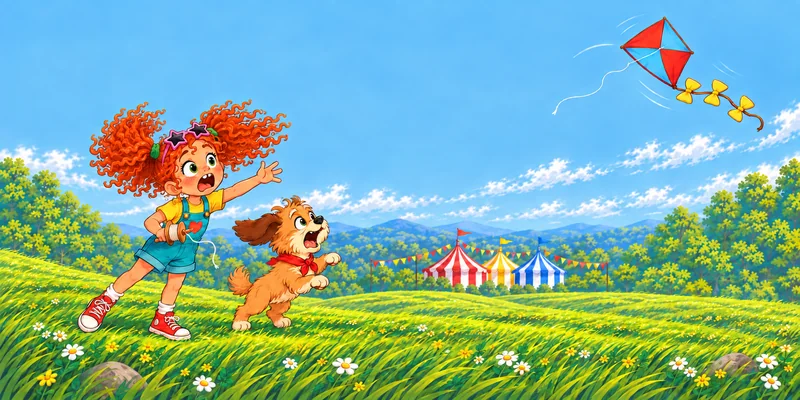
- Plan the art around the page turns. Each spread needs one job, and each reveal should come after a page turn. Our writing guide shows how to plan all 32 pages, spread by spread.
- Budget for the illustrations first. They’re usually most of the cost.
- Use a fixed-layout ebook and premium color print, or the spreads break.
- Publish a hardcover through IngramSpark if you want to reach libraries and gift buyers.
Board books follow the same steps, except for printing, which needs an offset printer (see step 7).
How much it costs and how long it takes
Here’s what each step costs and how long it takes when you hire professionals, using our published prices for a 32-page picture book.
32-page picture bookAuthorWings prices
| Step | Cost | Time |
|---|---|---|
| Edit | $240 copy edit, $249 critique or $599 full picture book edit | About 7 business days |
| Illustrate | $2,595 for up to 16 illustrations, with formatting included | 3 to 4 weeks |
| Cover | $399 for ebook, paperback and hardcover | Alongside illustration |
| Format | Included with the illustration package, or $499 on its own | 7 to 10 business days |
| ISBN | $295 for 10 from Bowker, or free on KDP for Amazon only (not in the totals) | Same day |
| Publish | Online Stores, $549: ebooks in five stores plus the Amazon paperback | 10 to 15 business days |
A picture book with your own art costs $1,542 to publish with us, and with 16 illustrations $3,593. Both totals include a $240 copy edit for a text that’s already revised, the same as our children’s book publishing costs, which break down every book type. If the story still needs work, a full picture book edit is $599 instead. Plan for two to three months from locked manuscript to launch, plus your review time.
Line prices are shown one by one, and the totals are package prices.
Save time and money with a package
Buying the steps together costs less than buying them one by one, and one team runs them side by side, so the book is ready sooner. Our Picture Book Package includes formatting with up to 16 illustrations for $2,595, which saves the $499 formatting fee. Children’s book ghostwriting writes and illustrates a picture book for you from $3,999, with editing and formatting included. For chapter books and middle grade, our Author-Polished bundles combine editing, cover, formatting and publishing in one price.
7 mistakes first-time children’s authors make when publishing
- Illustrating before editing.Every text change after the art is drawn costs money.
- Relying on the free ISBN.It only works on KDP, and it lists the publisher as “Independently published” instead of your own name or imprint.
- Skipping the rights clause.Without a written transfer, the illustrator may own the art in your book.
- Publishing a standard ebook.Its text reflows, so picture book spreads break apart on tablets and phones.
- Leaving out the age range.Parents browse by age, and a book without one is hard to find.
- Skipping the printed proof.Colors and margins look different on paper than on screen.
- Launching on Amazon only.Libraries, schools and local bookstores mostly order through Ingram, not Amazon.
How to publish a children’s book: FAQs
How can I publish a children’s book for free?
Make the art yourself, and publishing can cost almost nothing. KDP and IngramSpark charge nothing to set up a book, KDP gives you a free ISBN for Amazon, and print costs come out of each sale. What costs money is illustration, editing and a professional cover. An author who can draw, and who edits carefully with feedback from other writers, can publish for close to nothing. If your files are already finished, publishing alone starts at $249 with us.
How do I publish a children’s book on Amazon?
Use Amazon KDP. Create a free account, add the book details and the age range, upload a fixed-layout ebook and a print-ready PDF with bleed, choose premium color printing for color art, and order a printed proof before you publish. Amazon’s free Kindle Create tool builds the fixed-layout picture book ebook from your PDF.
How hard is it to publish a children’s book?
The publishing steps are easy to learn, and nobody reviews your book before it goes live. The hard part is producing a book that competes with traditionally published titles: a tight text, consistent illustrations and a cover that looks professional. Doing the steps in the right order (edit first, illustrate second) avoids the most expensive mistakes.
How long does it take to publish a children’s book?
Self-publishing a picture book usually takes two to three months from a locked manuscript, and most of that time goes to illustration. Traditional publishing takes much longer: finding an agent can take months or years, and a picture book usually comes out 18 months to two years after a publisher buys it.
Do I need an agent to publish a children’s book?
Only for the traditional path. The largest children’s book publishers read manuscripts only from agents, though many smaller houses accept them directly, so an agent is usually the first step. To self-publish, you don’t need an agent or a publisher. You set up your own accounts on KDP and IngramSpark and publish under your own name or imprint.
Can I make money publishing children’s books?
Yes, but much of the money comes from selling many copies over time, often as a series, and from in-person sales at schools and events. Self-publishing pays you every royalty instead of a small share, but you pay for production up front. Plan the budget so the book can earn it back, and think about a second book from the start.
Want us to publish it for you?
We take a children’s book from finished manuscript to live listing under one contract: editing, illustration, cover, formatting and publishing on Amazon, IngramSpark and more. Every account is opened in your name, and you keep 100% of the rights and royalties.
